
BPC-157 and the Gut-Brain Axis: The Science of Gut Integrity, Systemic Inflammatory Signaling, and Gastrointestinal Repair
Key Points
Most of the current evidence for BPC-157 still comes from animal studies.
Preclinical research suggests possible effects on gut integrity, inflammation, vascular and neural signaling.
In 53 user reports, common observations included improved digestion, reduced inflammation, and better recovery.
Oral BPC-157 may help improve gut health, while injection is a more common choice for injury treatment.
Human evidence remains limited, and BPC-157 is still an unapproved experimental compound.
Overview
BPC-157 occupies a rather unique position in peptide research and application, because many of its systemic effects originate from gastrointestinal experiments.
Although BPC-157 is closely associated with tendon repair, peptide therapy, and musculoskeletal rehabilitation, its mechanism of action remains distinctive. Early research on this stable gastric pentapeptide focused mainly on cytoprotection, vascular recruitment, gut integrity, inflammatory injury environments, and gut-brain axis disorders.
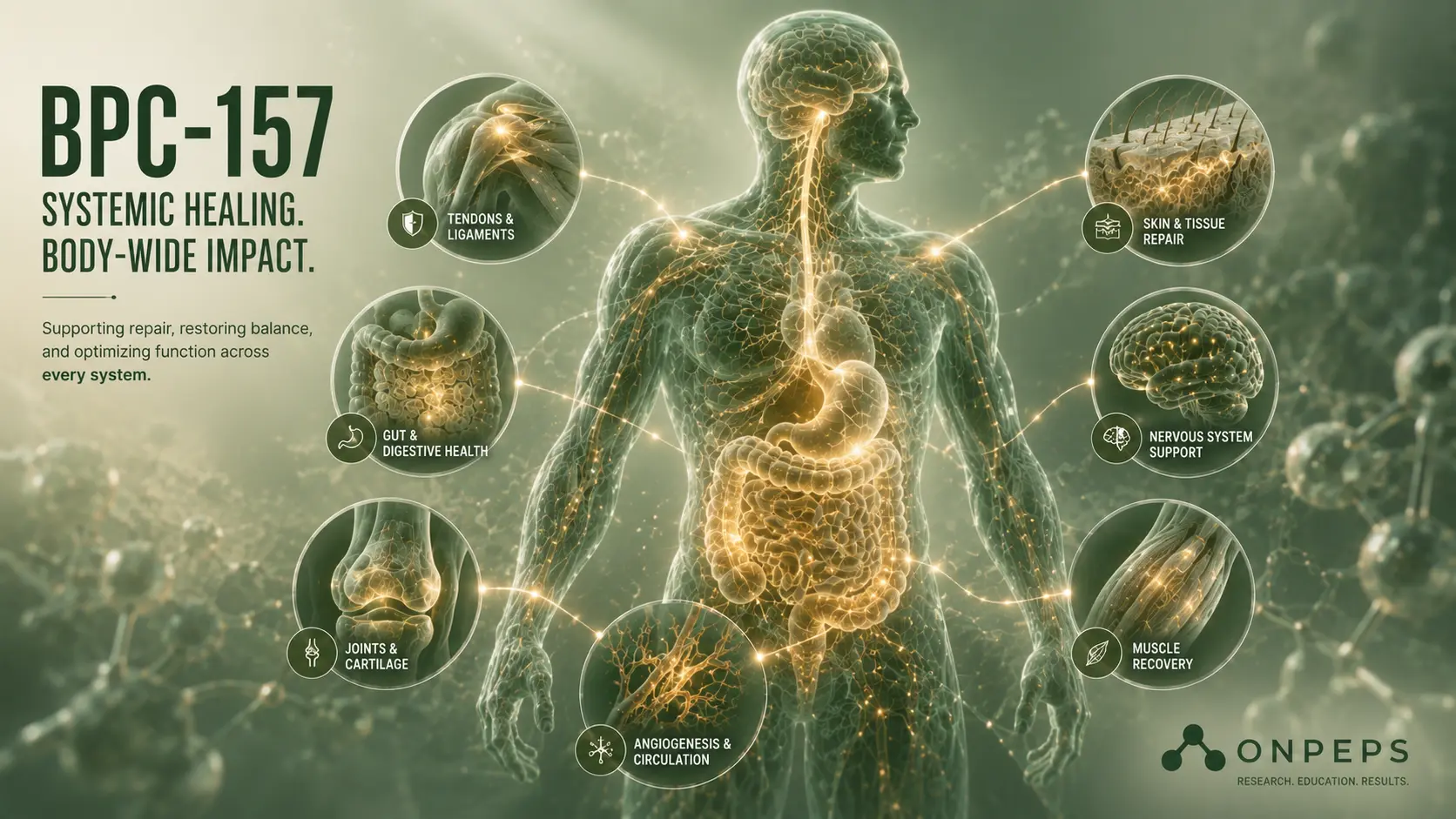
But over time, research has expanded, and BPC-157's effects go far beyond being a basic "gut repair peptide." We now know that it can activate a complex systemic network connecting the digestive, vascular, nervous, and immune systems.
1. Why BPC-157 Is Special
Early research showed that its ability to repair tissue, control inflammation, and balance neurotransmitters is not limited to repairing isolated injuries.
Instead, BPC-157 appears to act as a systemic master regulator, stabilizing the body's overall cellular communication rather than merely patching local damage.
Published literature has repeatedly shown that gastrointestinal models have the following protective effects:
Gastric ulcers
Disruption of intestinal permeability
Inflammatory bowel injury
Alcohol-induced gastric injury
NSAID-related tissue injury
Ischemic injury environments
Impaired vascular supply within digestive tissue
Multiple research papers have also shown that, compared with many other peptide compounds, BPC-157 exhibits unusual stability in the gastric environment. This has driven growing interest in oral capsule delivery rather than injection alone.
2. How Does BPC-157 Work?
The exact mechanism of BPC-157 remains debated, but some features are repeatedly observed.
This peptide helps blood vessels grow and stay healthy, thereby accelerating blood delivery to injured sites.
It appears to reduce inflammation rather than eliminate it entirely.
And it appears to enhance the body's own natural defenses against cellular damage.
It also works closely with the nitric oxide system, a chemical messenger the body uses to control blood flow.
Most research comes from animal experiments, and even researchers acknowledge that some of these effects remain unconfirmed.
3. Gastrointestinal Context: Real-World Response Signals
In our ongoing investigation of BPC-157's real-world efficacy and clinical evidence, we noticed some interesting results across 53 real-world use cases.
As before, users' real names and identities have been hidden for privacy reasons.
Key Dataset Overview
Chronic gut dysfunction: Users 8, 35, 41, 52. Reduced bloating, less gastric irritation, improved digestion, reduced inflammatory discomfort. Proposed preclinical mechanisms: gastric cytoprotection; endothelial stabilization; nitric oxide pathway modulation.
Alcohol/withdrawal stress: Users 8, 41. Reduced gastrointestinal fluctuations, improved digestion, reduced recovery discomfort after prolonged inflammatory stress exposure. Proposed preclinical mechanisms: mucosal protection; vascular protection; oxidative stress modulation.
Oral vs. injectable delivery: Users 31, 34, 35, 45, 46, 52. Oral delivery was considered more effective for certain gut-related conditions, while injectable protocols were generally more suitable for systemic or musculoskeletal recovery. Proposed preclinical mechanisms: gastric stability; unresolved systemic bioavailability.
Systemic inflammatory symptoms: Users 11, 49, 50. Reduced systemic inflammation, stiffness, recovery-phase fatigue, and inflammatory discomfort. Proposed preclinical mechanisms: cytokine modulation; endothelial repair; nitric oxide signaling interactions.
Neurological/mood-related effects: Users 8, 33, 41, 51, 52. Reduced anxiety, improved sleep, emotional blunting, altered stimulant response, emotional flattening, improved cognitive clarity. Proposed preclinical mechanisms: dopaminergic signaling; serotonergic interactions; gut-brain axis modulation.
4. Characteristics of Gastrointestinal Reports
Unlike the musculoskeletal dataset, gastrointestinal reports showed gradually emerging effects. Few users described "overnight recovery." Instead, most reports included the following:
Reduced irritation
Improved digestive stability
Reduced bloating
Reduced inflammatory discomfort
Improved food tolerance
Less gastrointestinal fluctuation during stress
User 8 provided one of the strongest gut-brain axis cases in the dataset. Years of heavy drinking, combined with heavy cannabis use during withdrawal, had severely damaged his body. He reported severe brain fog, gastrointestinal discomfort, poor sleep quality, irritability, cognitive dysfunction, and what he described as a "burning" digestive system.
After starting BPC-157 and TB-500 (the Wolverine stack), User 8 experienced the following:
Improved sleep quality
Reduced digestive discomfort
Better food tolerance
Improved mood
Over the following weeks, brain fog symptoms diminished.
This overlap between gastrointestinal improvement and lifestyle changes appeared frequently throughout the dataset. However, compared with orthopedic injury cases, gut-related case reports contain more variables, such as dietary changes, reduced alcohol consumption, reduced stress, adjusted training intensity, improved sleep, concurrent supplement use, probiotic use, and anti-inflammatory dietary interventions.
For this reason, when it comes to gastrointestinal outcomes, it is difficult to attribute the effects to BPC-157 use itself.
5. Summary
Many of BPC-157's systemic effects originate from gastrointestinal experiments. It may participate in gut-brain axis regulation by influencing gut integrity, inflammatory signaling, vascular and neural transmission.
But it must be emphasized: most current evidence comes from animal studies, and human evidence remains limited. BPC-157 is still an unapproved experimental compound.
Understanding its potential role in the gut-brain axis helps provide a more rational view of its research value and practical application boundaries.
Frequently Asked Questions
What is the main mechanism of action of BPC-157?
It is currently thought to act through multiple mechanisms, including angiogenesis, nitric oxide pathway modulation, anti-inflammatory effects, and gut barrier repair, but the exact mechanism remains debated.
Is the human evidence for BPC-157 sufficient?
No. The vast majority of data comes from animal studies. Human studies are few, small, and some results have never been fully published.
What potential effects does BPC-157 have on the gut-brain axis?
Preclinical research suggests it may influence the gut-brain axis through gut integrity, inflammatory signaling, and neurotransmitter systems, but these effects have not been confirmed in humans.