

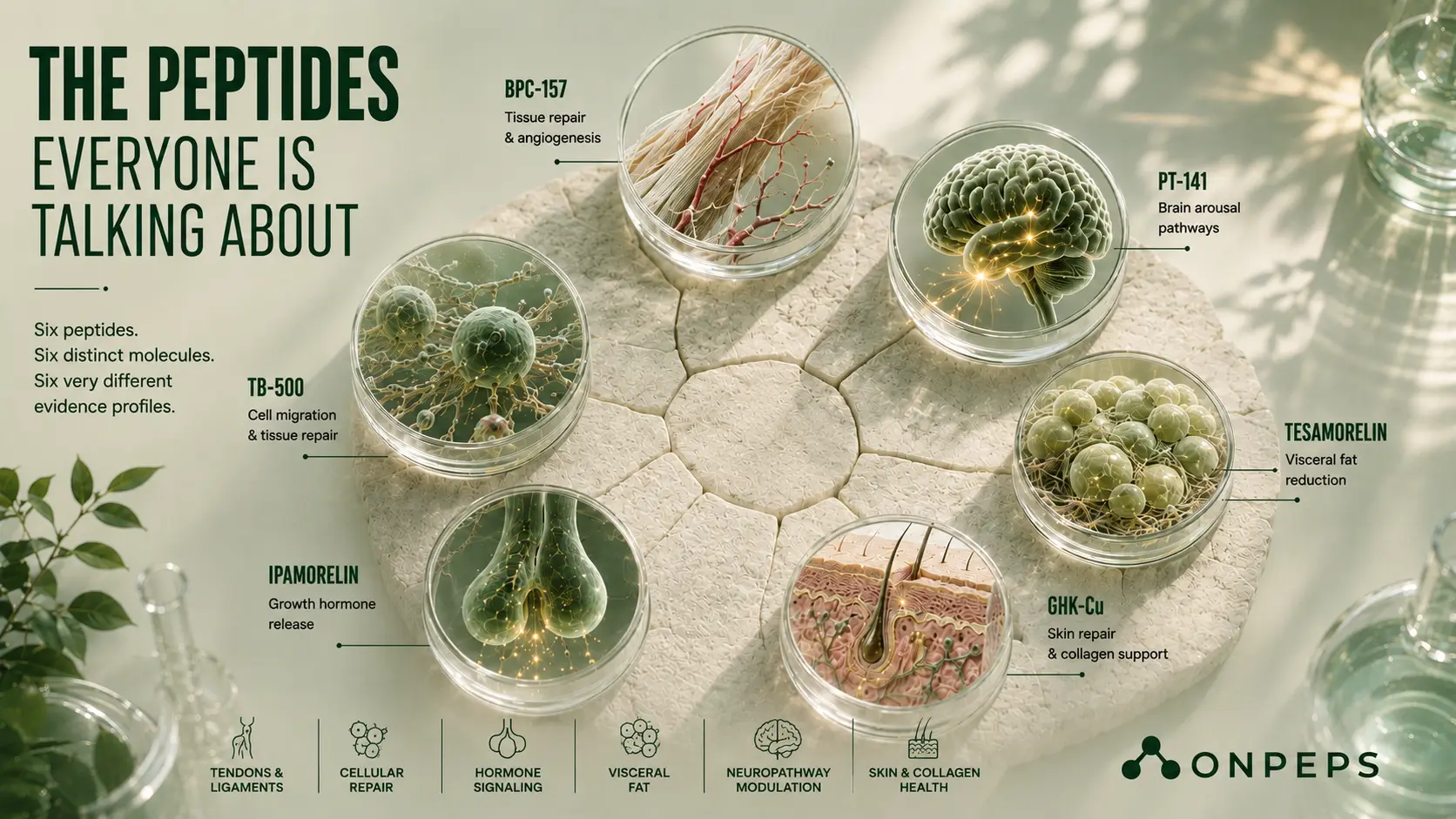
In 2026, peptide drugs continue to gain attention. Beyond GLP-1 receptor agonists like semaglutide, six peptides dominate discussions across forums, clinics, and pharmacies: BPC-157, TB-500, PT-141, Ipamorelin, Tesamorelin, and GHK-Cu. But they do not belong to the same therapeutic class. Their mechanisms differ, their evidence strength differs, and their regulatory status differs.
A comparison table
Peptide Main use Mechanism Evidence strength Approval status
BPC-157 Tissue repair Growth factor signaling Limited human data Not approved
TB-500 Recovery/inflammation Actin regulation and repair signaling Limited Not approved
Tesamorelin Visceral fat reduction GHRH analog Strong FDA approved
PT-141 Sexual dysfunction Melanocortin receptor activation Moderate FDA-approved variant exists
Ipamorelin Growth hormone release GHS-R1a agonist Limited Not approved
GHK-Cu Skin/hair/collagen Copper-binding regenerative signaling Stronger topical data
Core pattern: real biological effects, limited clinical validation
These six peptides share one thing: early research generally shows clear biological effects, but large-scale human clinical data remain scarce. BPC-157 and TB-500 show tissue repair potential in animal models, but human trials include fewer than 30 subjects. Ipamorelin has limited human studies. Tesamorelin and PT-141 have completed regulatory approval, giving them stronger evidence.
Core limitation: injection required, rapid breakdown
Most peptides are rapidly broken down by digestive enzymes, so nearly all require injection. Short half-lives mean precise dosing strategies are needed. The immune system may also recognize foreign peptide structures, creating immunogenicity risks, though structural modification and formulation design can help control this.
Why this overview matters
Grouping antibiotics, antidepressants, and blood thinners all as “small molecules” is not very useful. Likewise, calling six mechanistically different peptides “peptide drugs” does not help you make rational judgments. What matters is seeing each peptide’s evidence boundary, approval status, and practical limitations.
Conclusion
Peptide research in 2026 is in a special phase: biological promise is running ahead of clinical evidence and regulatory speed. For users, understanding this gap matters more than chasing hype.